
Social Media Addiction and Academic Burnout in Teenagers: What Parents and Students Must Understand
When Social Media Addiction Starts Replacing Focus and Learning
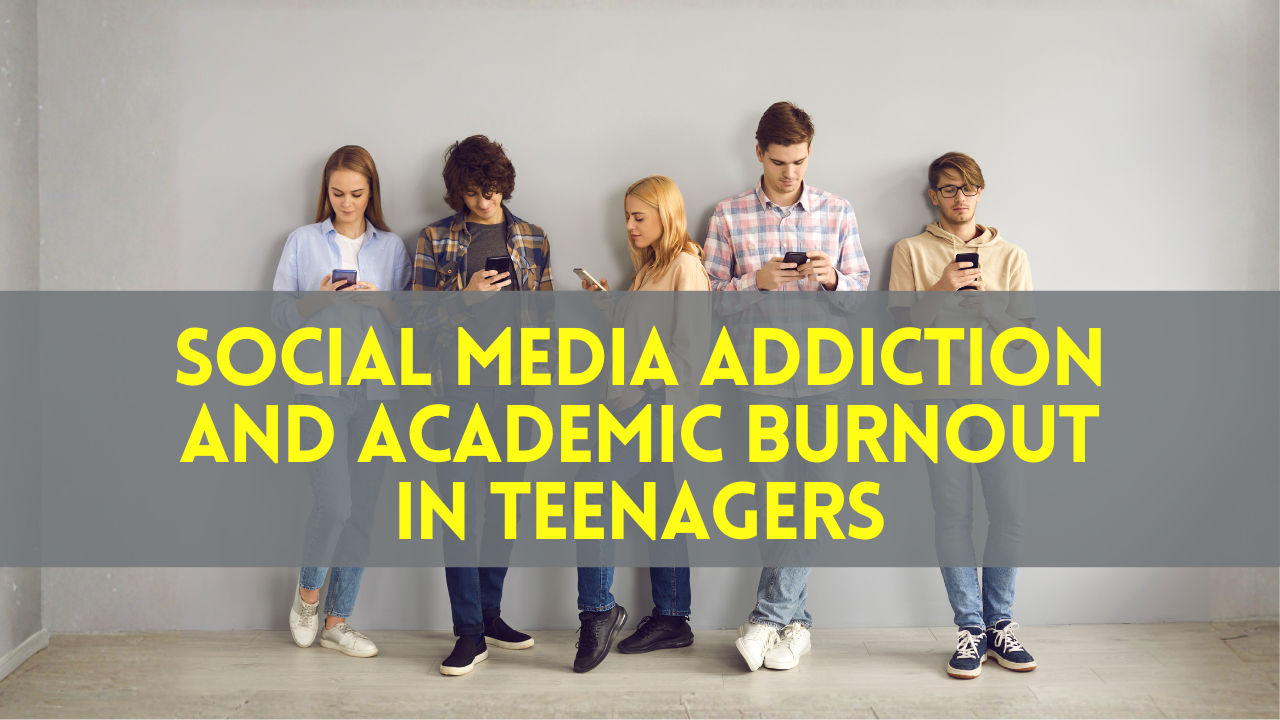
A teenager sits at their desk with full intention to study. The books are open, the syllabus is clear, and the pressure to perform is real. Yet within minutes, their attention shifts toward their phone. It may start with a simple notification or even a habitual check, but what follows is a gradual loss of focus. Minutes turn into long scrolling sessions, and by the end of the day, very little meaningful work gets done.
What makes this situation more concerning is that many students are aware of their behavior. They often feel guilty, frustrated, and even anxious about their inability to concentrate. They want to improve, but they find themselves repeating the same cycle. This is where Social Media Addiction becomes more than just a distraction. It begins to interfere with learning, emotional balance, and overall mental health.
Over time, this repeated pattern does not just affect productivity. It leads to something deeper and more serious known as academic burnout. Understanding this connection is essential for both students and parents who are trying to navigate the challenges of modern academic life.
What Is Social Media Addiction in Students and How It Develops Over Time
Social Media Addiction is a behavioral pattern in which students feel a strong and repeated urge to engage with social media platforms, even when it negatively affects their daily responsibilities. Unlike casual usage, this form of engagement is driven by habit, emotional need, and mental conditioning rather than conscious choice.
The development of this addiction is gradual. It often begins with harmless usage during free time or study breaks. Over time, the frequency of checking increases. Students may start using their phones during study sessions, meals, or even conversations. Eventually, the act of checking the phone becomes automatic, almost like a reflex.
One of the main reasons this habit becomes so powerful is because social media offers immediate rewards. Each notification, like, or message creates a small sense of satisfaction. The brain begins to associate phone usage with relief, excitement, or comfort. For example, a student who feels stressed about exams may turn to social media to relax. This creates a mental link between stress and scrolling, making it harder to break the habit.
This is how social media addiction in students evolves from a simple activity into a pattern that controls attention and behavior.
Understanding Academic Burnout in Teenagers and Why It Is Increasing
Academic burnout is a state of physical, emotional, and mental exhaustion caused by prolonged academic stress. It is not simply about feeling tired after studying. It is a deeper sense of being overwhelmed, unmotivated, and disconnected from academic goals.
Teenagers experiencing burnout often report feeling exhausted even after rest. They may struggle to find motivation to begin or complete tasks. Concentration becomes difficult, and even simple assignments may feel overwhelming. Emotional symptoms such as irritability, frustration, or a sense of helplessness are also common.
For example, a student may sit down to study but feel mentally drained before they even start. They may read the same paragraph multiple times without understanding it. This creates a sense of failure, which further reduces motivation. Over time, this pattern leads to avoidance, where the student begins to delay or ignore academic responsibilities.
The rise in burnout among teenagers is closely linked to increased academic pressure combined with constant digital engagement. When teenage social media addiction is present, it intensifies this problem by reducing focus and increasing stress.
How Social Media Addiction Leads to Academic Burnout in Students
Constant Distraction Weakens Deep Concentration
One of the most significant effects of Social Media Addiction is the disruption of sustained attention. Studying requires the brain to stay focused on a single task for an extended period. This allows information to be processed, understood, and stored effectively. However, when a student checks their phone repeatedly, this process is interrupted.
Each interruption forces the brain to restart its focus. Even a short distraction can take several minutes to recover from. When this happens multiple times during a study session, the overall efficiency drops significantly. A student may spend hours studying but achieve very little, leading to frustration and reduced confidence.
Over time, this repeated pattern creates mental fatigue. The brain becomes tired not because of hard work, but because of constant switching between tasks. This fatigue is one of the early signs of academic burnout.
Sleep Disruption Reduces Energy and Cognitive Performance
Another important factor linking social media addiction in students to burnout is poor sleep. Many teenagers use their phones late into the night, often intending to spend just a few minutes but ending up scrolling for much longer. This continuous engagement keeps the brain active and delays the natural process of falling asleep.
In addition, exposure to screens can interfere with the body’s internal clock, making it harder to achieve restful sleep. As a result, students wake up feeling tired and unfocused. This lack of rest affects memory, concentration, and emotional stability throughout the day.
For example, a student who has not slept well may find it difficult to follow lessons in class or complete assignments efficiently. They may become easily irritated or overwhelmed by tasks that would otherwise feel manageable. Over time, this ongoing exhaustion contributes significantly to academic burnout.
Comparison and Social Pressure Increase Emotional Stress
Social media often presents an idealized version of reality, where achievements, appearances, and lifestyles are highlighted. Teenagers, who are already in a stage of self-discovery, may compare themselves to what they see online. Even when they understand that these images are curated, the emotional impact remains strong.
A student may feel that others are performing better academically, managing their time more effectively, or living a more fulfilling life. This perception can lead to self-doubt and increased pressure to meet unrealistic standards. At the same time, their own unfinished work adds to the stress.
This combination of external comparison and internal pressure creates a heavy emotional burden. Instead of motivating the student, it often leads to anxiety and reduced self-esteem, which are key components of burnout.
Procrastination Creates a Cycle of Stress and Avoidance
Social media provides an easy escape from academic pressure. When a student feels overwhelmed, they may choose to scroll through content instead of starting their work. While this offers temporary relief, it delays important tasks and increases stress in the long run.
As deadlines approach, the student feels more anxious and pressured. This often leads to last-minute efforts, which are less effective and more stressful. After completing the task, the student may feel exhausted and discouraged, making it harder to start the next one.
This creates a cycle where stress leads to avoidance, and avoidance leads back to social media. Breaking this cycle requires awareness and intentional effort.
Signs of Teenage Social Media Addiction That Are Often Ignored
The signs of teenage social media addiction are not always obvious. Many of them can appear as normal behavior, especially in a digital age where phone usage is common. However, certain patterns indicate a deeper issue.
A student may begin checking their phone immediately after waking up and continue using it late into the night. They may struggle to complete tasks without interruptions or feel anxious when they do not have access to their device. Over time, they may lose interest in activities they once enjoyed, such as hobbies or spending time with family.
Another important sign is emotional reaction. A student may become irritated or defensive when asked to reduce screen time. This response often reflects discomfort caused by reduced stimulation rather than simple resistance.
Recognizing these signs early allows parents and educators to take supportive action before the problem becomes more severe.
The Psychological Cycle Behind Social Media Addiction and Burnout
Understanding the psychological cycle is key to addressing the problem effectively. A student begins by feeling stressed due to academic demands. Instead of addressing the stress directly, they turn to social media as a form of escape. This provides temporary relief and distraction.
However, the underlying tasks remain incomplete. As time passes, the pressure increases, leading to even more stress. The student then seeks further escape through social media, reinforcing the habit.
This cycle continues until the student feels overwhelmed and mentally exhausted. At this stage, both focus and motivation are significantly reduced. Breaking this cycle requires both awareness and structured changes in behavior.
What Teens Experience Internally and What Parents Often Misunderstand
Teenagers dealing with Social Media Addiction often experience a mix of frustration and guilt. They are aware that their habits are affecting their performance, but they struggle to control them. This can lead to a loss of confidence and a feeling of being stuck.
Parents, on the other hand, may interpret this behavior as a lack of discipline or seriousness. They may feel concerned and attempt to enforce stricter rules, which can sometimes lead to conflict rather than improvement.
The key to addressing this issue lies in understanding. When teens feel supported rather than judged, they are more likely to open up and take steps toward change. Similarly, when parents understand the psychological aspect of addiction, they can provide more effective guidance.
Practical Solutions to Reduce Social Media Addiction and Prevent Burnout
Reducing Social Media Addiction requires a balanced approach rather than extreme restrictions. One of the most effective strategies is to create small and consistent boundaries. For example, keeping the phone away during study sessions or limiting usage during certain hours can help improve focus without creating resistance.
Establishing a structured routine also plays a crucial role. When students have a clear schedule for studying, breaks, and relaxation, it becomes easier to manage time effectively. Short, focused study sessions followed by controlled breaks can improve both productivity and motivation.
Replacing screen time with meaningful activities is equally important. Physical exercise, creative hobbies, and face-to-face interactions provide deeper satisfaction and reduce reliance on digital stimulation. These activities also contribute to better mental health.
Encouraging awareness is another powerful tool. When students begin to notice how often they check their phone and how it affects their mood and focus, they become more motivated to change their behavior.
Improving sleep habits is essential for overall well-being. Reducing phone usage before bedtime and maintaining a consistent sleep schedule can significantly improve focus and emotional balance.
If the problem persists, seeking professional help can provide valuable support. Mental health professionals can help identify underlying issues and offer personalized strategies to manage behavior effectively.
Final Thoughts on Social Media Addiction and Academic Burnout in Teenagers
Teenagers today are growing up in an environment where digital engagement is constant. The challenge is not just about reducing screen time, but about building a healthier relationship with technology. Struggling with focus does not mean a student lacks ability or motivation. It often reflects the impact of an environment designed to capture attention.
Understanding the connection between Social Media Addiction and academic burnout allows both students and parents to approach the issue with clarity and compassion. With the right strategies, habits can be reshaped, and focus can be rebuilt over time.
Get Professional Help for Social Media Addiction at Evolve Psychiatry
If your teen is struggling with focus, academic pressure, or excessive screen use, professional support can make a meaningful difference. At Evolve Psychiatry, we understand how social media addiction in students and burnout affect both academic performance and emotional well-being.
Our team provides personalized, in-person care to help teens improve concentration, manage stress, and develop healthier routines. We focus on practical strategies that fit into everyday life, making it easier for students to regain control and confidence.
Evolve Psychiatry offers in person care at six clinics across New York and North Carolina:
• Evolve Psychiatry, Massapequa, New York
• Evolve Psychiatry, Syosset, New York
• Evolve Psychiatry, Albany, New York
• Evolve Psychiatry, Garden City, New York
• Evolve Psychiatry, Hauppauge, New York
• Evolve Psychiatry, Wilmington, North Carolina
Taking the first step toward support can help your teen move from burnout to balance and build a stronger, healthier future.
