
Is Social Media Addiction Taking Over Your Family Life? The Hidden Role of Family Therapy in Breaking the Cycle
A Modern Family Struggle No One Talks About Enough
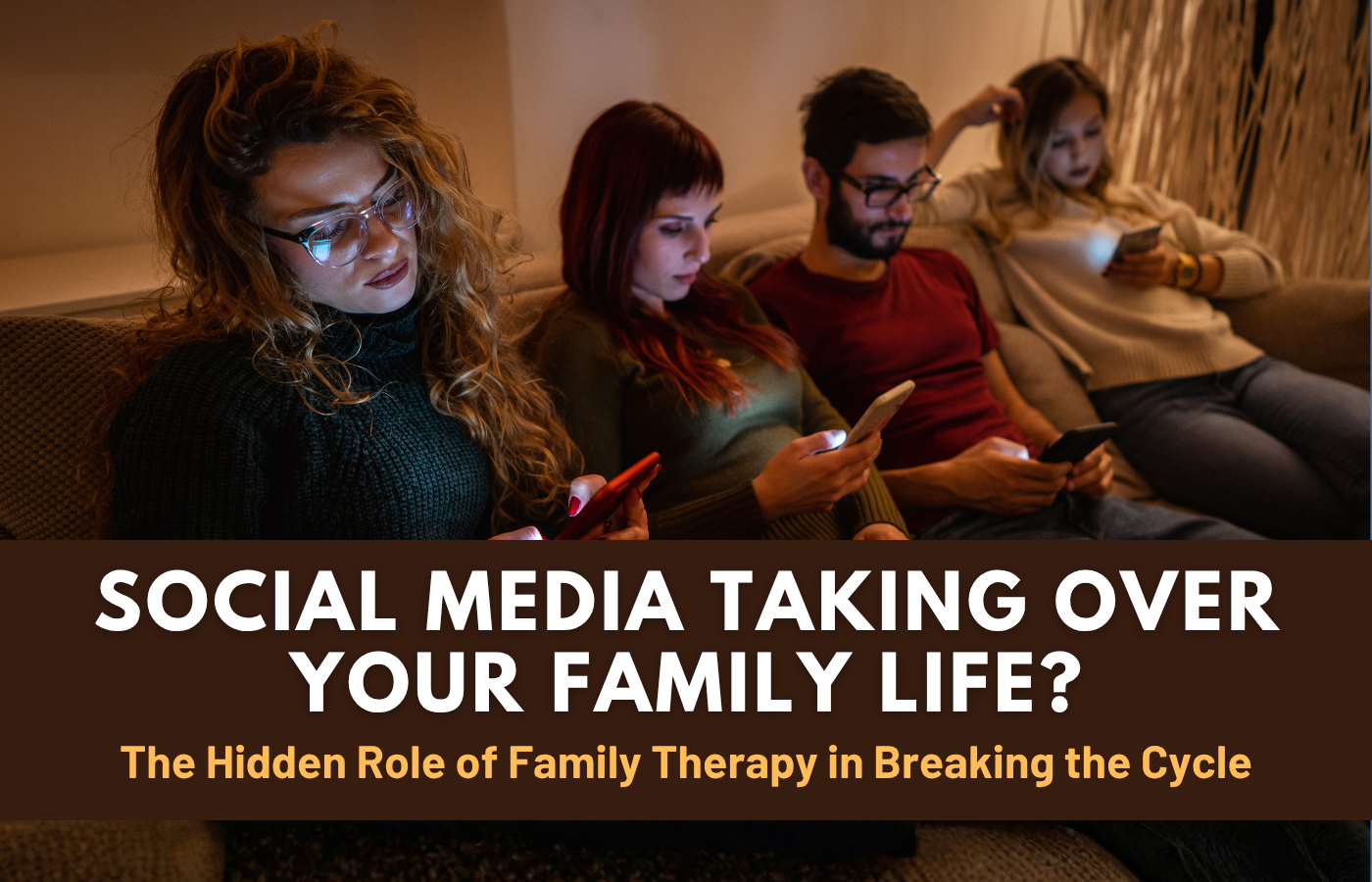
It often begins in a way that feels completely normal. After a long day, a family gathers in the same room. Everyone is physically present, yet emotionally distant. One person scrolls through short videos, another replies to messages, and someone else is lost in endless feeds. There is silence, but it does not feel peaceful. It feels disconnected.
Over time, this pattern slowly becomes routine. Conversations become shorter and less meaningful. Eye contact reduces. Small misunderstandings begin to turn into frequent arguments. Family members may start feeling unheard, unseen, or even unimportant. What once felt like a close-knit home begins to feel emotionally distant.
This is how Social Media Addiction quietly affects family life. It is not always loud or obvious, but its impact is deep. Many people believe it is simply a matter of discipline or time management. They try setting screen limits or deleting apps, but the change rarely lasts. This happens because the real issue goes beyond the screen itself.
In many cases, social media becomes a way to cope with emotions. It fills gaps created by stress, loneliness, boredom, or unresolved conflicts. When this happens, reducing screen time alone cannot solve the problem. The focus needs to shift from control to connection.
This is where family therapy becomes important. It helps families understand the deeper emotional patterns behind behavior. Instead of blaming one person, it brings everyone together to rebuild communication, trust, and emotional closeness. In this blog, we will explore what Social Media Addiction really means, how it affects individuals and families, and how family therapy can help create lasting change.
What Is Social Media Addiction and Why Is It So Hard to Notice?
A Simple Explanation Anyone Can Understand
Social Media Addiction refers to a pattern where a person feels a strong and repeated urge to use social media, even when it starts interfering with daily responsibilities, relationships, or emotional well-being. It is not about how often someone uses social media, but about the level of control they have over that use.
For example, a person may intend to check their phone briefly but end up spending a long time scrolling without realizing it. They may delay important tasks, ignore responsibilities, or sacrifice sleep just to stay online. Over time, this pattern becomes automatic and difficult to break.
This happens because social media platforms are designed to capture attention. Each notification, like, or comment triggers a small sense of reward in the brain. These repeated rewards create a habit loop that makes it harder to stop. What starts as casual use can slowly turn into a compulsive behavior.
Why It Feels Normal Until It Becomes a Problem
One of the biggest challenges in recognizing Social Media Addiction is that excessive use has become socially acceptable. People use social media for communication, entertainment, and even work. Because of this, it rarely feels like a problem in the beginning.
Many individuals justify their usage by telling themselves they are staying informed or relaxing. However, the time spent online gradually increases without awareness. By the time negative effects become visible, such as mood changes or relationship issues, the habit is already deeply formed.
This normalization makes it harder for both individuals and families to identify when usage has crossed the line from healthy to harmful.
Signs and Symptoms of Social Media Addiction People Often Ignore
Behavioral Signs
The behavioral signs of Social Media Addiction often appear subtle at first. A person may check their phone repeatedly, even when there are no notifications. They may lose track of time while scrolling and feel surprised at how much time has passed. Important responsibilities such as studying, working, or household tasks may be delayed or ignored.
Another common sign is restlessness when the phone is not accessible. The person may feel uncomfortable or distracted when they are unable to check their social media accounts. Over time, these behaviors become routine and are often dismissed as normal habits.
Emotional and Mental Signs
The emotional impact is usually more significant than the behavioral signs. A person may feel anxious when they are not online or when they do not receive expected responses. They may begin to compare themselves with others and feel inadequate or dissatisfied with their own life.
Mood swings can also become more frequent. A person’s emotional state may depend on online interactions, such as likes, comments, or messages. Irritability is common, especially when someone suggests reducing screen time or setting limits.
Impact on Daily Life
As the pattern continues, it starts affecting daily functioning. Sleep quality may decline due to late-night scrolling. Productivity may reduce, and focus becomes weaker. Real-life interactions may decrease, leading to social withdrawal.
The person may begin to prefer online engagement over real-world relationships. This shift can gradually weaken emotional connections within the family.
Why Social Media Addiction Affects the Whole Family, Not Just One Person
The Ripple Effect in Family Dynamics
Social Media Addiction does not exist in isolation. When one family member is deeply engaged in their phone, it changes the overall dynamic of the household. Conversations become limited, and meaningful interactions reduce. Other family members may feel ignored or unimportant, which can lead to frustration and emotional distance.
Over time, this lack of communication can create misunderstandings. Small issues may escalate because there is no space for open and honest discussion. The emotional gap between family members continues to grow.
Parenting Challenges in the Digital Age
Parents today face a unique challenge. They are expected to manage their children’s screen time while also navigating their own digital habits. This can create inconsistency in rules and expectations. Children are more likely to resist limits when they see similar behavior in adults.
This often leads to conflict. Parents may feel they are losing control, while children may feel restricted or misunderstood. Without clear communication, these tensions can become a regular part of family life.
Emotional Disconnection at Home
One of the most concerning effects is emotional disconnection. Families may spend time together physically but remain emotionally distant. There is less sharing of thoughts, feelings, and experiences.
Over time, this reduces the sense of belonging within the family. Members may stop turning to each other for support and instead rely on external sources for comfort.
The Psychological Impact of Social Media Addiction on Teens and Adults
Effects on Teen Mental Health
Teenagers are particularly sensitive to the effects of social media. During this stage, identity and self-worth are still developing. Social media often exposes them to constant comparison, where they measure their lives against carefully curated images of others.
This can lead to feelings of inadequacy and low self-esteem. Teens may become overly dependent on validation through likes and comments. When that validation is not received, it can affect their mood and confidence.
Anxiety and sadness can increase, especially when online interactions replace real-life connections.
Effects on Adults
Adults also experience significant psychological effects. Constant notifications and the pressure to stay updated can create ongoing stress. Social media may become a way to escape from responsibilities or difficult emotions.
This avoidance can lead to unresolved issues and increased emotional strain. Over time, it may also affect relationships, work performance, and overall well-being.
The Cycle of Addiction and Emotional Avoidance
One of the key patterns in Social Media Addiction is emotional avoidance. When a person feels stressed, lonely, or overwhelmed, they turn to social media for quick relief. This relief is temporary, but it reinforces the behavior.
As a result, the underlying issues remain unaddressed. The person continues to rely on social media as a coping mechanism, creating a cycle that becomes harder to break.
Why Individual Efforts Often Fail to Break Social Media Addiction
The Limits of Willpower
Many people believe they can control their usage through willpower alone. They set limits, uninstall apps, or try to reduce screen time. While these steps may work temporarily, they often do not lead to lasting change. This is because the behavior is not just about habit. It is connected to deeper emotional needs that are not being addressed.
Hidden Emotional Triggers
Behind excessive social media use, there are often emotional triggers such as loneliness, stress, boredom, or unresolved conflicts. These triggers push the person toward their phone as a form of relief. Unless these underlying causes are identified and addressed, the behavior is likely to continue.
Lack of Support System
Change becomes more difficult when a person tries to do it alone. Without support from family, it is easy to fall back into old patterns. A supportive environment plays a crucial role in creating lasting change.
What Is Family Therapy and How Can It Help with Social Media Addiction?
A Simple and Reassuring Explanation
Family therapy is a structured form of counseling where family members come together to work through challenges with the guidance of a trained professional. It focuses on improving communication, understanding emotions, and strengthening relationships. The environment is safe and non-judgmental. Each person is given the opportunity to share their perspective and feel heard.
Why Family Therapy Works Better Than Individual Efforts
Family therapy looks at the bigger picture. Instead of focusing on one individual, it examines how behaviors are connected within the family system. This approach reduces blame and encourages teamwork. When families work together, they are more likely to create meaningful and lasting change.
How Family Therapy Addresses the Root Causes of Social Media Addiction
Identifying Emotional Gaps
Family therapy helps uncover emotional gaps that may be driving excessive social media use. These may include lack of attention, unresolved conflicts, or feelings of isolation. Understanding these gaps is the first step toward healing.
Improving Communication Within the Family
Therapy teaches practical communication skills. Family members learn how to listen actively, express emotions clearly, and respond with empathy. This reduces misunderstandings and builds trust.
Rebuilding Trust and Connection
As communication improves, relationships begin to strengthen. Family members start feeling valued and supported. This reduces the need to seek connection through social media.
Creating Healthy Digital Boundaries Together
Instead of imposing strict rules, families collaborate to create boundaries that work for everyone. This approach increases acceptance and reduces resistance.
Practical Steps Families Can Start Today to Reduce Social Media Addiction
Families can begin making small but meaningful changes in their daily routine. Setting tech-free times, such as during meals or before bedtime, can create space for real conversations. Replacing screen time with shared activities like walks, games, or simple discussions can help rebuild connection.
Daily emotional check-ins are another powerful tool. Asking each other about their day and listening without judgment can strengthen relationships. Parents can lead by example by demonstrating balanced digital habits.
The goal is not to eliminate social media completely but to use it mindfully and in a way that does not replace real-life connections.
Overcoming Social Media Addiction with Family Therapy
Social Media Addiction is not just about screens. It is about connection, communication, and emotional well-being. When families begin to understand each other and rebuild trust, the need for constant digital escape starts to reduce.
Healing is possible when the focus shifts from control to connection. With the right support, families can create a healthier balance and strengthen their relationships.
Evolve Psychiatry offers in person care at six clinics across New York and North Carolina:
• Evolve Psychiatry, Massapequa, New York
• Evolve Psychiatry, Syosset, New York
• Evolve Psychiatry, Albany, New York
• Evolve Psychiatry, Garden City, New York
• Evolve Psychiatry, Hauppauge, New York
• Evolve Psychiatry, Wilmington, North Carolina
With professional guidance, families can move toward a more connected, balanced, and emotionally fulfilling life.
