
TMS Treatment Timeline: How Long Does It Take for TMS to Start Working?
“Why Am I Not Feeling Better Yet?” Understanding the TMS Treatment Timeline
Starting TMS therapy can bring a sense of hope. Many people begin treatment after struggling with depression, anxiety, or OCD for a long time. But after the first few sessions, a common thought appears: “Why am I not feeling better yet?”
This feeling is completely normal. Unlike some treatments that promise quick results, TMS works gradually. It is designed to gently retrain the brain over time. That means progress may not feel immediate, but it is happening step by step.
In this guide, you will understand the full TMS treatment timeline. You will learn how long it takes to see results, what changes to expect each week, and how to stay confident throughout the process.
What Is TMS and Why Does the TMS Treatment Timeline Take Time?
TMS Explained in Simple Terms
Transcranial Magnetic Stimulation, or TMS, is a non-invasive treatment that uses magnetic pulses to stimulate areas of the brain involved in mood and emotional control.
Think of it like waking up parts of the brain that have become less active. These areas are often linked to depression and anxiety. TMS helps them become more active and balanced again.
Why TMS Is Not an Instant Fix
TMS does not work overnight. The brain needs time to respond to repeated stimulation.
A helpful way to think about it is like going to the gym. One workout does not build strength. But consistent workouts over weeks lead to real change. TMS works in a similar way. Each session builds on the previous one, slowly improving how the brain functions.
TMS Treatment Timeline Breakdown: Sessions, Duration, and Daily Commitment
How Many Sessions Per Week?
Most patients attend TMS sessions five days a week. This weekday schedule helps maintain consistency, which is key for results.
Total Duration of TMS Treatment
A typical TMS treatment timeline lasts about four to six weeks. This usually includes around 20 to 30 sessions in total.
How Long Is a TMS Session?
Each session usually lasts between 20 to 40 minutes. During this time, you sit comfortably while the machine delivers gentle magnetic pulses to your scalp.
Scheduling Routine and Consistency
Consistency matters more than speed. Attending sessions regularly helps the brain adapt and respond better. Missing too many sessions can slow progress, just like skipping workouts affects fitness results.
Week-by-Week TMS Treatment Timeline: What to Expect at Each Stage
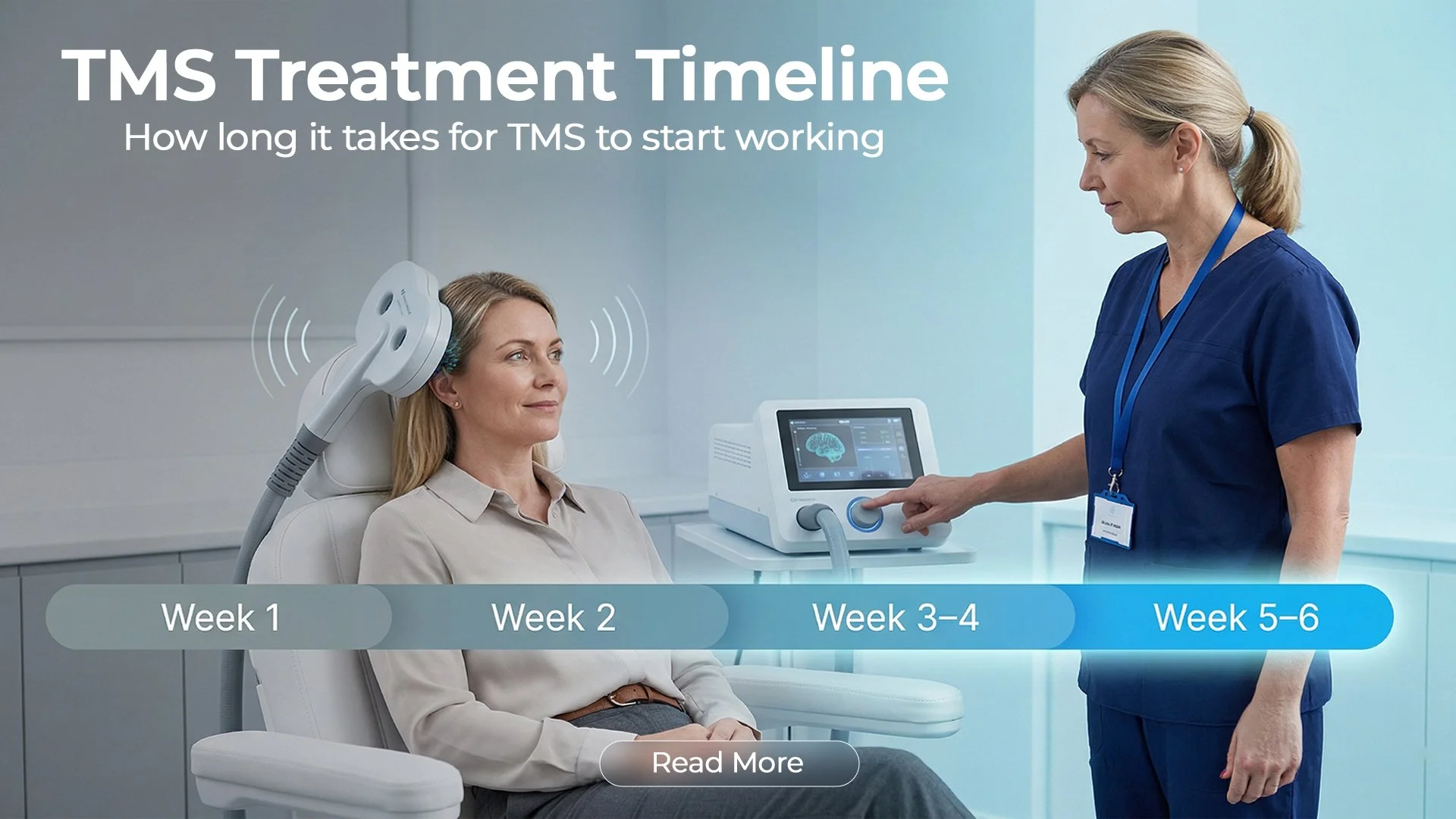
Week 1: Getting Used to the Process
The first week is about adjustment. You may notice the physical sensation of tapping on your scalp. Most people do not feel emotional changes yet. This stage is about building routine and comfort.
Week 2: Early Subtle Changes Begin
Small changes may start to appear. You might sleep a little better or feel slightly more focused. These changes are easy to miss but are important signs that the brain is responding.
Week 3 to 4: Noticeable Improvements
This is when many people begin to feel clearer improvements. Mood may feel lighter. Anxiety may reduce. Daily tasks may feel less overwhelming.
Week 5 to 6: Stronger and More Stable Results
By this stage, improvements often become more stable. You may feel more like yourself again. Energy, motivation, and emotional balance continue to improve.
How Long Does It Take for TMS to Start Working? Realistic Expectations
When Most Patients Start Noticing Changes
Most patients begin to notice changes between weeks two and four. This can vary from person to person.
Why Results Can Feel Slow at First
Early changes are often subtle. The brain is adjusting in the background, even if you do not feel a big shift right away.
What If You Don’t Feel Better Right Away?
Not feeling better in the first week or two does not mean the treatment is not working. It simply means your brain needs more time. Staying consistent is the most important factor.
When Does TMS Reach Full Effect? Understanding the Complete Timeline
Peak Results Timeline
The full benefits of TMS are usually seen toward the end of the treatment course or shortly after it ends.
Continued Improvement After Treatment Ends
Even after sessions are complete, the brain continues to improve. Many patients notice ongoing progress in the weeks following treatment.
How Long Do TMS Results Last?
Duration of Relief
TMS results can last for several months or even longer. Many patients experience long-term relief from symptoms.
Do You Need Booster Sessions?
Some patients may need occasional booster sessions if symptoms return. These sessions help maintain progress.
What Helps Maintain Results
Healthy habits such as regular sleep, therapy, and stress management can help extend the benefits of TMS.
What Affects Your TMS Treatment Timeline?
Several factors can influence how quickly TMS works:
Severity of symptoms
Consistency in attending sessions
Individual brain response
Co-existing conditions like ADHD or OCD
Lifestyle factors such as sleep and stress
Each person’s journey is unique, which is why timelines can vary.
Is TMS Right for You? A Simple Decision Guide
Who Should Consider TMS
TMS is often helpful for people who have not responded well to medication or who experience side effects from medications.
Signs You May Benefit from TMS
If you have ongoing symptoms that affect your daily life despite trying other treatments, TMS may be worth considering.
How to Move Forward with Confidence
Speaking with a mental health professional can help you understand if TMS is right for you. A personalized plan can remove uncertainty and give you a clear path forward.
Frequently Asked Questions About TMS Treatment Timeline
How long does it take for TMS to start working?
Most people notice changes within two to four weeks of starting treatment.
How long does TMS treatment take overall?
A full treatment course usually lasts four to six weeks.
How long is each TMS session?
Each session typically takes about 20 to 40 minutes.
What if I don’t see results immediately?
This is normal. TMS works gradually, and early changes may be subtle.
How long do TMS results last?
Results can last for months or longer, depending on the individual.
Can results improve after treatment ends?
Yes, many people continue to improve even after completing their sessions.
Trust the TMS Treatment Timeline and Stay Consistent
TMS is not a quick fix, but it is a powerful and steady path toward improvement. Understanding the TMS treatment timeline can reduce anxiety and help you stay patient.
Each session builds progress. Even when changes feel small, they are meaningful. Over time, these small improvements lead to real and lasting change.
If you are considering TMS, expert guidance can make the journey smoother and more reassuring.
Evolve Psychiatry offers in person care at six clinics across New York and North Carolina:
• Evolve Psychiatry, Massapequa, New York
• Evolve Psychiatry, Syosset, New York
• Evolve Psychiatry, Albany, New York
• Evolve Psychiatry, Garden City, New York
• Evolve Psychiatry, Hauppauge, New York
• Evolve Psychiatry, Wilmington, North Carolina
At Evolve Psychiatry, experienced professionals guide you through every step of the process. With the right support and a clear plan, meaningful improvement is possible.
