
How Many Sessions for TMS to Work? Realistic Timeline Explained
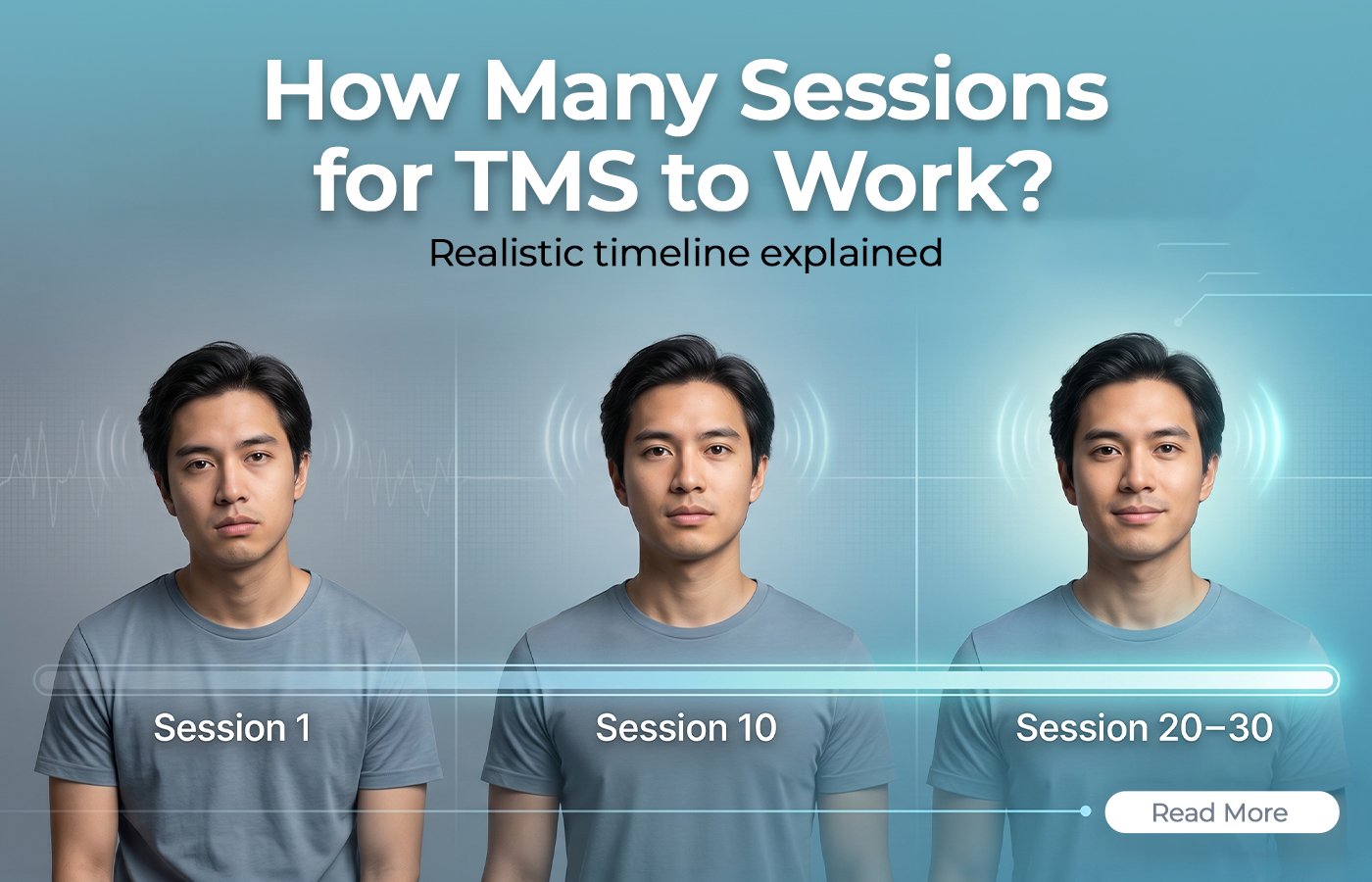
How Many Sessions for TMS to Work?
Starting a new treatment for depression, anxiety, OCD or ADHD can feel hopeful – until the waiting begins. With TMS (Transcranial Magnetic Stimulation), many people wonder “Why isn’t it working yet?” after just a few sessions. It’s normal to feel anxious when progress seems slow. In this blog, we’ll clear up the confusion. You’ll learn exactly how many TMS sessions are typically needed, how long each treatment takes, and when most people start noticing changes. This clear, step-by-step timeline will help you stay calm and confident as you move through your TMS journey.
What Is TMS and Why Does It Require Multiple Sessions?
TMS Therapy is a non-invasive therapy that uses magnetic pulses to stimulate areas of the brain linked to mood and focus. Instead of pills or injections, a magnetic coil rests on your scalp and sends gentle pulses to underactive brain regions. This stimulation acts like a jump start for your brain’s wiring.
Just like learning a new skill or rehabilitating an injured muscle, the brain needs repetition to change. One TMS session is like one workout at the gym – helpful but not enough by itself. Each session nudges the brain cells a bit, helping them form new connections and balance brain chemistry over time. Because of this, multiple sessions are necessary to see real improvement. A single session can’t reset the whole system, but a series of treatments can gradually “retrain” the brain. That’s why TMS treatment is typically spread out over several weeks rather than done all at once.
How Many Sessions Are Needed for TMS to Work? (Standard Treatment Plan)
Most people will complete 20 to 36 TMS sessions in a course of treatment. In practical terms, this usually means 5 sessions per week (Monday through Friday) for about 4 to 6 weeks. In total, think of it as roughly 30 treatment visits. This is the standard plan that many doctors and TMS clinics use for major depression and similar conditions.
Key points about the typical schedule:
Sessions per week: About 5 days (weekday schedule). Weekends are usually off.
Total sessions: Often 20–30 sessions in the first round. (Some plans go up to 36 if needed.)
Duration: About 4–6 weeks of treatment. So if you do 5 days per week for 6 weeks, that’s ~30 sessions.
Different conditions may use slightly different numbers:
Depression (MDD): Usually ~30 sessions over 6 weeks (5 per week).
OCD (dTMS protocol): Typically around 30 sessions (5/week for 6 weeks), following the FDA-approved regimen.
Anxiety/PTSD: Often similar to depression (4–6 weeks), though in severe cases treatment might stretch to 8 weeks.
ADHD: TMS for ADHD is still experimental, but many studies use a similar schedule (5 days/week for 4–6 weeks).
Your care team will tailor the plan to your needs. If symptoms improve very quickly, they may stop a few sessions early. If progress is slow, they might add extra sessions. But as a general rule, plan on several weeks of daily treatment rather than a quick fix.
Read more: TMS Treatment Timeline: How Long Does It Take for TMS to Start Working?
How Long Does a TMS Treatment Course Last? (Sessions and Scheduling)
Overall treatment length: About 4–6 weeks, with daily weekday sessions. Most people finish a full course of TMS in a month or a bit longer. This includes roughly 20–30 sessions, assuming you don’t miss days.
Session duration: Each TMS treatment session typically lasts 20–30 minutes of actual magnetic pulses. In practical terms, plan to spend around 45–60 minutes at the clinic per session. This longer slot covers setup and wrap-up. For example, the first session often includes a 10–15 minute “motor threshold mapping” where the clinician sets the exact strength (about 40–50 minutes total for the first day). After that, most sessions fit in a one-hour appointment: 5-10 minutes to get situated, ~30 minutes of stimulation, and a few minutes afterward to discuss any feedback.
Scheduling and frequency:
Weekdays only: TMS is usually done Monday–Friday, with weekends off to give your brain a bit of rest.
Consistent scheduling: Aim to schedule your sessions around the same time each day if possible. This regular routine helps your brain adapt.
Session gaps: Missing a day here and there is usually okay. Clinics will make up any missed sessions by adjusting the schedule. The important part is keeping a steady pace overall.
Multiple sessions in a day (accelerated TMS): Some centers offer accelerated or intensive TMS, where you do several short sessions in one day (often using a faster protocol like intermittent Theta-Burst). In that case, expect to be at the clinic for several hours with short breaks (e.g., multiple 3–10 minute sessions with 10–15 minute rests). That’s a more condensed option that some people choose if they need faster relief. But for most patients, standard once-a-day treatments are used.
Read More: Is TMS Permanent? What You Need to Know About Long-Term TMS Results
When Does TMS Start Working? (Timeline of Improvement)
A common question is “How soon will I feel better?” The answer is: Gradually. TMS is not an instant fix, but many people start noticing small changes after a couple of weeks. Here’s what patients often experience:
Week 1: First week is mostly about getting comfortable. You’ll adapt to the sensations (a tapping or clicking on your scalp) and may feel a bit tired afterward. It’s rare to feel major mood changes so early. Many people don’t notice much by the end of week 1 except that treatment is part of their routine.
Weeks 2–3: This is when subtle shifts can occur. You might sleep a bit better, have slightly more energy, or feel a small lift in mood. Often these changes are not dramatic, but they are early signs that the treatment is working. It’s important to stay patient – improvements at this stage are usually gentle.
Weeks 4–6: By about the fourth week (3-4 weeks of treatment), more significant improvements often show up. You may find yourself feeling more motivated, experiencing reduced anxiety, or noticing that depressive symptoms are lighter. These changes build each week. Many people feel substantially better by the end of their 4th to 6th week of sessions.
After treatment: Even after the last scheduled session, the brain continues to adjust. Some patients report that they keep feeling better for weeks after finishing treatment. In fact, the full benefits of TMS often materialize at or just after the end of the course. Think of it as rewiring – the process continues a little after the last “exercise.”
In summary, TMS works gradually. Do not expect a sudden mood “switch” right after the first or second treatment. Instead, anticipate a slow buildup: notice subtle improvements around 2–4 weeks in, with the greatest gains by the end of 5–6 weeks. This is confirmed in clinical observations: most patients start to feel results after a few weeks, and around 60% experience meaningful symptom relief by completing the standard course.
Individual response varies. Some may feel uplifted earlier, while others take longer. Factors like how severe your condition is, how long you’ve been unwell, and other health habits (sleep, exercise, stress) can affect the pace. The key is consistency: keeping up with your scheduled sessions gives your brain the best chance to respond.
How Long Do TMS Results Last? (Maintaining Your Gains)
One of the great things about TMS is how lasting its benefits can be. Unlike a medication you stop (and then the effect disappears), TMS actually changes the brain in a more enduring way. Research shows that many people stay well for a long time after their initial treatment course:
Months of relief: Studies find that about two-thirds of patients who respond to TMS are still improved at 3 months after treatment. Even at 6 months, over half remain significantly better. By one year, roughly half of people maintain most of their gains. This is a strong result compared to many other treatments, and it happens without taking daily pills.
Booster sessions: If symptoms start to creep back over time (say after several months), your doctor might recommend a booster TMS session or a short repeat course. The good news is that TMS “works twice” – if you responded well the first time, a booster session often re-activates that success. In one study, 84% of patients who relapsed regained their benefit after booster treatments. So even if you need a touch-up later, it’s usually very effective.
Long-term outlook: A large follow-up study showed that 71% of patients who reached full remission stayed in remission for a full year after TMS. For the others who did experience some return of symptoms, most quickly got back to a good level with additional help.
Lifestyle and support: Continuing positive habits helps keep the results locked in. Regular exercise, good sleep, therapy or counseling, and support from family/friends can all extend the benefits. Think of TMS as one major piece of a full wellness plan.
So yes – TMS results can last a very long time. Many people enjoy relief for months or even years. It’s one reason doctors often suggest trying TMS when other treatments haven’t given full relief: it has the power to create real, lasting change in the brain. Even if depression or anxiety come back years later, patients often respond well to another course of TMS.
What to Expect During Your TMS Journey
Going through TMS therapy is pretty straightforward once you know the steps. Here’s a breakdown of what happens from start to finish:
Initial Consultation: Before TMS begins, you’ll have an appointment with a specialist. They’ll review your medical and treatment history to make sure TMS is safe and likely to help. Often they’ll do a short test called motor threshold mapping: placing the coil and sending pulses to determine the right intensity for you. The first session includes this setup, so it takes a bit longer (up to 50 minutes). After that, the setup is already done.
Weekly Schedule: Expect to come into the clinic 5 days a week (for example, Monday through Friday) each week during your treatment course. You’ll have the weekends off. Most patients continue working or attending school as usual on treatment days. TMS sessions can be scheduled early in the morning, over lunch, or late afternoon to fit around your routine. In fact, many people handle a full day of work and then come for an evening session, or vice versa.
Session Duration: Once you’re lying back in the TMS chair, each session is really short. The coil will deliver magnetic pulses for about 20–30 minutes. During that time, you’ll feel a tapping or buzzing on your head. It’s not painful – at most, some people feel a slight tingling or mild scalp discomfort. Between pulse trains you might hear clicks or feel little kicks against your scalp, which is normal. You’ll usually wear earplugs to muffle the clicking sounds.
Daily Appointment Time: Although the stimulation is only 20–30 minutes, plan to be at the clinic about 45–60 minutes per visit. This allows time to settle in, for the staff to make any coil positioning adjustments, and a brief chat at the end. Clinics typically book appointments in one-hour blocks, giving a small buffer. You can use that buffer for checking in, restroom breaks, or just to relax if you need a moment.
After Each Session: Most people can go right back to their day afterward. You do not need anesthesia or recovery time. It’s common to feel a bit tired or have a minor headache after a session, but these effects usually fade quickly (one center notes that mild headaches or scalp soreness in week one often respond to just a bit of extra water or a light snack). In general, there’s no “foggy” feeling – many patients drive themselves home and get on with work or errands. Just be sure to have a light breakfast or lunch before treatment and stay hydrated.
Keeping Your Routine: You can absolutely keep up with most normal activities while on TMS. Patients often continue jobs, school, or childcare without much disruption. Some clinics even allow doing some light work (reading, puzzles, etc.) during the session itself, though most people just rest quietly. The key is to not feel rushed: it’s fine to arrive a few minutes early or late if needed, as long as you complete the session.
Accelerated Treatment (optional): If you and your doctor decide on an accelerated protocol (multiple sessions per day), here’s what changes: On those treatment days, expect to spend 3–5 hours at the clinic with short breaks in between. For example, a clinic might do three 10-minute TMS sessions, each separated by a 15-minute rest. It feels like a mini “TMS marathon” day, but it wraps up an entire course in just a week. Normal scheduling (one session per day) is more common and doesn’t require this long visit.
What about unexpected events? If you have to miss a session (illness, travel, etc.), talk to your clinic. Often you can make up a missed day on the next weekend or by extending one more week. Missing occasionally doesn’t ruin the treatment, but try to avoid frequent gaps. It’s similar to exercise: consistency yields the best results.
In summary, during your TMS journey expect daily weekday visits of about an hour each. The active treatment is short, but plan for prep and post-care time. Your staff will guide you through each step, answer questions, and adjust as needed. Before you know it, the course will be over and you’ll have given your brain several weeks of solid support.
Is TMS Right for You?
After learning the timeline and details, you might wonder if TMS fits your situation. TMS is especially worth considering if:
You have moderate to severe depression (or OCD) that hasn’t fully improved with medication or therapy.
You’ve experienced significant side effects from antidepressants or simply prefer a drug-free approach.
You have recurring depression or feel at risk of relapse, and want a more durable option.
You can commit to daily sessions for several weeks (or are open to an intensive schedule).
TMS is FDA-approved for depression and OCD, and many people with anxiety or other conditions also benefit. It’s safe for most adults; the main exclusions are (for example) having metal in the head or a history of epilepsy. Your TMS provider will review any medical issues to ensure safety.
If you’re thinking about TMS, here are some next steps:
Talk with Your Doctor: Mention you’re interested in TMS. Your doctor may refer you to a psychiatrist or specialized clinic that offers it. This initial doctor discussion is simply to see if you’ve tried standard treatments first and to check for any contraindications (like implanted devices or seizure history).
Consult a TMS Specialist: At a TMS center (like Evolve Psychiatry), a psychiatrist or trained clinician will evaluate you. They’ll discuss your symptoms, do a brief exam, and perhaps run some charts or scales. This visit is also a great time to ask any questions: “How many sessions do you usually recommend? What are the costs and insurance options? What will I feel during treatment?”
Understand the Commitment: The specialist will outline a treatment plan. This includes the number of sessions (your course) and any homework (like continuing therapy or medications if you use them). Knowing this plan ahead of time can ease anxiety.
Get Prepared: Once scheduled, you can mentally prepare by keeping your schedule flexible and planning easy days for after sessions. It might help to think of TMS as a self-care routine. Dress comfortably and bring headphones or a book if you like during treatment.
Lean on Support: It’s okay to feel nervous before starting TMS – many patients do. Consider asking a family member or friend to come with you at least for the first visit. The TMS team is used to supporting anxious patients and will explain each step so you feel secure.
Stay Positive and Patient: Remember, some change is happening even if you don’t feel it immediately. Celebrate small signs of progress (like one less anxious moment, or a slightly better mood day), and keep in mind the full benefit often comes gradually.
Choosing TMS is a personal decision. Talk over your feelings with loved ones or a therapist, and get input from the experts. Thousands of patients have found TMS helpful after other treatments failed. You now have a clear timeline of what to expect. This knowledge can turn waiting and worry into confidence – you know how long to give it, and that consistent attendance is key.
Frequently Asked Questions
How many TMS treatments will I need to feel better?
Every case is unique, but most patients complete a full course of about 20–30 sessions. These are typically done 5 days per week over about 4–6 weeks. Your provider will check your progress along the way. If you improve sooner, your course might be shortened; if needed, they can extend or add sessions. In general, plan on a month or more of treatment.
How long is each TMS session?
Each treatment involves about 20–30 minutes of magnetic stimulation. With setup and wrap-up, an appointment runs around 45 to 60 minutes. The very first session may include extra time for finding the right stimulation level (motor threshold mapping), bringing that visit closer to 60–75 minutes. After that, most visits fit neatly into one hour.
When will I start feeling better after TMS?
TMS effects build gradually. Many patients notice subtle improvements after 2–3 weeks (around 10–15 sessions). By week 4 or later, you may see more obvious mood lifts or reduced anxiety. Full benefits are usually experienced by the end of the 4–6 week course. If you don’t feel much in the first week, that’s normal – give it a few weeks for the treatment to take hold.
Do I need maintenance (booster) sessions after TMS?
Not always, but sometimes. Some patients do perfectly well for many months or even a year without extra sessions. Research shows about half of patients remain improved at one year without boosters. However, if your symptoms slowly return over time, your doctor may recommend occasional booster sessions (for example, 1-2 days of TMS months after the initial course) to "top up" your progress. Many people find boosters helpful to sustain long-term relief.
What if I miss a TMS session?
Ideally, you should attend all scheduled sessions. Missing an occasional day won’t ruin treatment, but try not to skip too many. If you miss a weekday, talk to your clinic about making it up on a weekend or extending your schedule by a day or two. The closer to the planned frequency you stay (five days a week), the better your brain will respond.
Will I feel the effects right away?
No, TMS isn’t instantaneous. You will not feel an immediate mood surge after a single session. Instead, the effects are subtle and cumulative. Think of it like going to the gym: you don’t see muscles grow after day one, but day by day, the strength builds. TMS works similarly on the brain’s wiring. Be patient and keep attending; positive changes are likely happening under the surface each week.
Can I work or study during TMS treatment?
Yes. TMS is an outpatient procedure that doesn’t interfere with your daily activities. Many patients continue their normal routines. You can schedule sessions early morning or late afternoon around work. The treatment itself doesn’t require sedation, so you leave feeling clear-headed. If you have a very busy workday, you might choose a session time that least disrupts you, but overall TMS allows you to maintain regular life as much as possible.
Conclusion
TMS is a process – not a quick switch – but it’s one that leads to real change. By now, you have a clear timeline in mind: typically 20–30 sessions over about 4–6 weeks, with subtle improvements showing up after a few weeks and major progress by the end. This knowledge can turn uncertainty into confidence. Instead of worrying each day, you can focus on completing your scheduled sessions and tracking small gains.
Remember: if depression, anxiety, OCD or ADHD symptoms have been holding you back, TMS offers a powerful way to reset your brain activity without medication. Thousands of patients have regained hope and stability with TMS after other treatments fell short. Keep communicating with your care team, combine TMS with healthy habits and any ongoing therapy, and trust the timeline.
You don’t have to go through this alone. At Evolve Psychiatry, our expert team will guide you every step of the way. We understand the questions and fears patients have about TMS. We’ll explain exactly how many sessions you might need, fit appointments to your schedule, and watch your progress closely. Our goal is to make the journey smooth and reassuring.
If TMS seems right for you, we encourage you to reach out for more information. The team at Evolve Psychiatry is ready to help you take that next step toward relief.
Evolve Psychiatry offers in-person care at six clinics across New York and North Carolina:
Our clinics provide knowledgeable, compassionate TMS treatment and support. You can schedule a consultation to discuss your situation and get a personalized treatment plan. Relief is possible, and we’re here to help you find it.
