
History of TMS From Discovery to Modern Mental Health Treatment
“Is TMS a New Treatment or a Proven One?” The Truth Behind Its History
If you are considering TMS therapy, one of the first questions that naturally comes to mind is whether this treatment is truly reliable. Many people assume that because TMS uses advanced technology, it must be a recent or experimental option. This uncertainty can create hesitation, especially when you are already dealing with depression, anxiety, OCD, or ADHD.
The truth is that TMS is not new at all. It has been studied, tested, and refined over several decades. What may feel like a modern breakthrough is actually the result of years of scientific progress, careful research, and real patient outcomes.
Understanding the history of TMS is important because it answers a deeper question. Can this treatment be trusted? When you learn how TMS was discovered, how long it has been used, and how it evolved into a clinical treatment, the answer becomes much clearer.
In this blog, we will walk through the full journey of TMS. You will learn when TMS was invented, how long TMS therapy has been around, and why it is now considered a safe and effective option in modern mental health care.
TMS Test Basics: What Is TMS and Why Its History Matters
What Is TMS in Simple Terms
Transcranial Magnetic Stimulation, commonly known as TMS Therapy, is a non-invasive treatment that uses magnetic pulses to stimulate specific areas of the brain. These areas are closely connected to mood, emotional balance, and focus.
In many mental health conditions, certain parts of the brain become less active or do not communicate effectively with other regions. TMS helps restore this balance by gently activating those areas. Instead of relying on medication to change brain chemistry, TMS works directly on brain activity itself.
A simple way to understand this is to think of the brain like a network of signals. When some signals are weak or disrupted, it can affect how you feel and function. TMS helps strengthen those signals so the brain can work more smoothly again.
Why Understanding the History of TMS Test Builds Trust
When something sounds unfamiliar, it is natural to question whether it is safe or proven. This is especially true when it comes to mental health treatments. Many people worry about trying something that feels new or unclear.
Learning about the history of TMS removes that uncertainty. It shows that this treatment did not appear suddenly. It developed over time through research, testing, and continuous improvement.
You can compare this to how technology evolves. Early versions are often basic and limited, but over time they become more refined and reliable. TMS followed a similar path. What started as a scientific discovery has now become a trusted clinical treatment used around the world.
Also Read: TMS Treatment Timeline: How Long Does It Take for TMS to Start Working?
When Was TMS Invented? The Early Discovery Phase
The Origin of TMS Technology
TMS was first developed in the mid-1980s, when scientists discovered that magnetic fields could influence brain activity in a safe and controlled way. This discovery was a major breakthrough because it introduced a new method of interacting with the brain without surgery or medication.
Before this, most treatments focused on chemical changes through medication or more invasive approaches. The idea that magnetic pulses could stimulate the brain opened an entirely new direction in neuroscience.
This early stage was focused on understanding the basic science behind brain stimulation. Researchers wanted to see how the brain responded and what could be learned from it.
Early Purpose of TMS
In its early years, TMS was not used as a treatment. It was mainly a research tool that helped scientists study how different parts of the brain function.
For example, researchers used TMS to explore how the brain controls movement or processes information. Over time, they began to notice that stimulating certain areas could influence mood and emotional responses.
This observation became the foundation for using TMS in mental health treatment. It marked the beginning of a shift from pure research to real-world application.
Early Research and Challenges in TMS Development
Initial Experiments and Limitations
In the beginning, TMS technology was still developing. Researchers were learning how to control the strength, frequency, and placement of magnetic pulses.
Results were not always consistent. Some individuals experienced noticeable changes, while others did not respond as strongly. This inconsistency highlighted the need for better understanding and more precise techniques.
This phase was important because it allowed scientists to test different approaches and learn what worked best. It laid the groundwork for future improvements.
Challenges Scientists Faced
Developing a new treatment always comes with challenges. In the case of TMS, researchers needed to answer several key questions.
They had to determine which areas of the brain should be targeted for different conditions. They also needed to establish how often treatments should be given and how long the effects would last.
Another challenge was building trust. New treatments are often met with skepticism, especially when they involve the brain. Scientists had to provide clear evidence that TMS was both safe and effective.
Over time, consistent research and improved results helped overcome these challenges.
How TMS Evolved Into a Clinical Treatment
Shift From Research Tool to Therapy
As research progressed, scientists began focusing on using TMS as a treatment for mental health conditions, particularly depression. They found that repeated stimulation of specific brain areas could lead to meaningful improvements in mood.
This was a turning point. TMS was no longer just a tool for studying the brain. It was becoming a practical solution for people who needed help.
This shift did not happen overnight. It took years of testing, refinement, and clinical trials to confirm that TMS could be used safely and effectively as a treatment.
Improvements in Technology and Techniques
Over time, technology improved significantly. Devices became more precise, allowing doctors to target the correct areas of the brain more accurately.
Treatment protocols also became more standardized. This means doctors had clearer guidelines on how to deliver TMS for the best results.
These improvements made TMS more reliable and easier to use in clinical settings. They also helped create a better experience for patients.
Also Read: How Many Sessions for TMS to Work? Realistic Timeline Explained
TMS Test and FDA Approval: A Turning Point in Mental Health Care
When TMS Became an Approved Treatment
TMS received approval for treating depression in the late 2000s. This approval was based on extensive research showing that the treatment was both safe and effective.
Approval marked an important milestone because it confirmed that TMS had met strict standards for medical use.
Why FDA Approval Changed Everything
Once approved, TMS gained wider acceptance among healthcare providers and patients. It was no longer seen as an experimental option.
Doctors began offering TMS more confidently, especially for patients who had not responded well to traditional treatments. Patients also felt more comfortable exploring it as a legitimate option.
This stage helped move TMS from research into everyday clinical practice.
How Modern TMS Test Works Today
Advanced Brain Targeting and Personalization
Today, TMS is highly advanced and personalized. Doctors use careful assessment and mapping techniques to identify the exact area of the brain that needs stimulation.
Each treatment plan is customized. Settings such as intensity and frequency are adjusted based on the individual’s needs and response.
This level of personalization improves the chances of success and makes the treatment more effective.
Improved Patient Experience
Modern TMS sessions are simple and comfortable. Patients remain awake and seated during treatment. There is no need for anesthesia or recovery time.
Sessions are relatively short, and most people can return to their normal routine immediately afterward.
This makes TMS a practical option for many individuals who want effective treatment without major disruption to their daily life.
Also Read: TMS Test : What It Is and Why It Matters Before Treatment
Why TMS Is Now Considered Safe and Reliable
Years of Research and Clinical Use
One of the strongest reasons TMS is trusted today is its long history of research. Over the years, studies have consistently shown that it is safe when performed correctly.
This long track record provides reassurance to both doctors and patients.
Consistent Results Across Patients
While individual experiences may vary, many patients report meaningful improvements in their symptoms. This consistency across different groups of people strengthens confidence in the treatment.
Growing Acceptance in Mental Health Care
TMS is now widely used in clinics and recommended by professionals. Its role in mental health care continues to grow as more people become aware of its benefits.
TMS Test Timeline: Key Milestones in TMS Development
The development of TMS can be understood through a simple timeline.
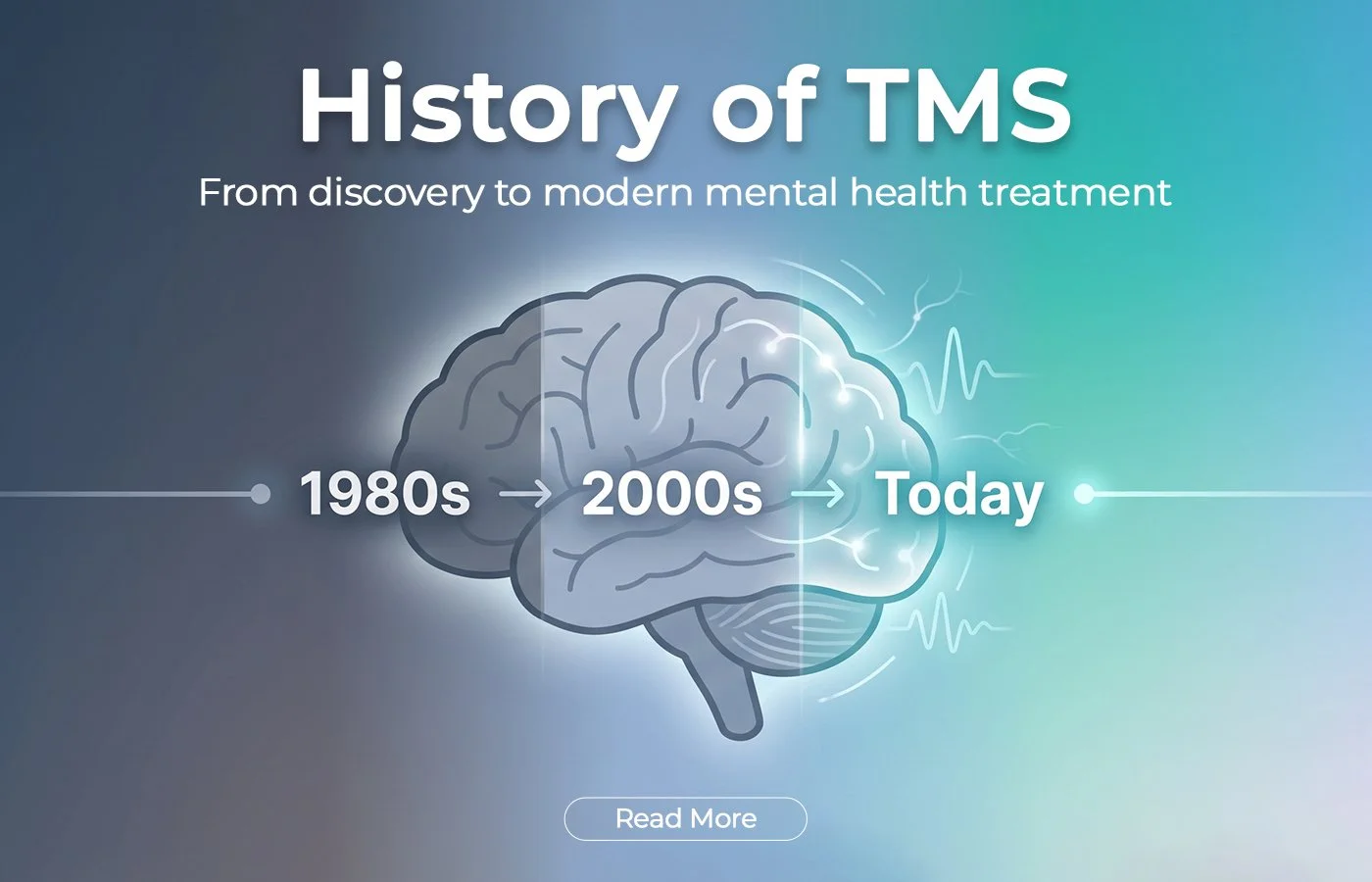
In the mid-1980s, magnetic brain stimulation was first discovered. During the following years, it was mainly used for research purposes. In the 1990s and early 2000s, scientists began exploring its potential as a treatment for depression.
By the late 2000s, TMS received approval for clinical use. Since then, it has continued to evolve, with improvements in technology and expansion into other conditions like anxiety and OCD.
Today, TMS is a well-established treatment with advanced techniques and personalized care.
Why the History of TMS Matters for Patients Today
Understanding the history of TMS helps reduce fear and uncertainty. It shows that this treatment has been carefully developed over time.
It also highlights the amount of research and effort that has gone into making it safe and effective. This builds confidence and helps patients feel more comfortable considering it.
When you know where a treatment comes from, it becomes easier to trust where it can take you.
Should You Trust TMS Test? A Practical Decision Guide
If you are still unsure, it may help to focus on your current needs. If you have tried other treatments without success, or if you are looking for an alternative to medication, TMS may be worth considering.
Understanding its long history can make this decision easier. It shows that TMS is not a temporary trend but a well-developed option backed by years of progress.
Speaking with a qualified professional can help you take the next step with confidence.
Frequently Asked Questions About TMS Test History
When was TMS invented?
TMS was first developed in the mid-1980s as a research tool.
How long has TMS therapy been around?
It has been used as a treatment for over two decades and continues to improve.
Is TMS a new or experimental treatment?
No, it is a well-established treatment with a long history.
Is TMS safe and proven?
Yes, it has been studied extensively and is considered safe for many patients.
Why is TMS becoming more popular now?
Improved technology and greater awareness have made it more accessible.
From Discovery to Trust, TMS Test Has Come a Long Way
TMS has evolved from a scientific discovery into a trusted mental health treatment. Its journey reflects years of research, improvement, and real-world success. Understanding this history helps remove doubt and build confidence. It shows that TMS is not just a modern idea but a well-developed solution with a strong foundation.
If you are considering TMS, expert guidance can help you take the next step with clarity.
Evolve Psychiatry offers in person care at six clinics across New York and North Carolina:
• Evolve Psychiatry, Massapequa, New York
• Evolve Psychiatry, Syosset, New York
• Evolve Psychiatry, Albany, New York
• Evolve Psychiatry, Garden City, New York
• Evolve Psychiatry, Hauppauge, New York
• Evolve Psychiatry, Wilmington, North Carolina
At Evolve Psychiatry, experienced professionals guide you through every step, from assessment to treatment. With the right support and a personalized plan, you can move forward with confidence toward better mental health.
